
What Is an Organizational Network at Work?
Your org chart tells you who reports to whom. It does not tell you who people actually trust, where work gets unstuck, or who connects teams when priorities shift. That is where an organizational network comes in. It shows the real relationships behind everyday work, so you can see how information moves, where collaboration breaks down, and which people quietly keep things running.
If you want stronger onboarding, better cross-functional teamwork, or faster decisions, it helps to understand the network your team already uses. In practice, an organizational network is less about hierarchy and more about connection patterns. It reveals who shares context, who bridges silos, and where your team may need more support.
At LEAD.bot, we focus on helping teams build stronger working relationships instead of relying on guesswork. When you can see how people connect, you can design better ways for them to meet, share knowledge, and solve problems together.
What an organizational network actually means
It maps the relationships behind the org chart
An organizational network is the web of working relationships inside your company. It includes formal connections, like reporting lines and project teams, and informal ones, like the colleague everyone asks for help or the teammate who introduces people across functions.
Those informal ties matter more than most teams realize. They shape how quickly new ideas spread, how smoothly new hires ramp up, and how fast people find the right person when a problem appears. If you only look at titles, you miss the people who carry trust and context across the business.
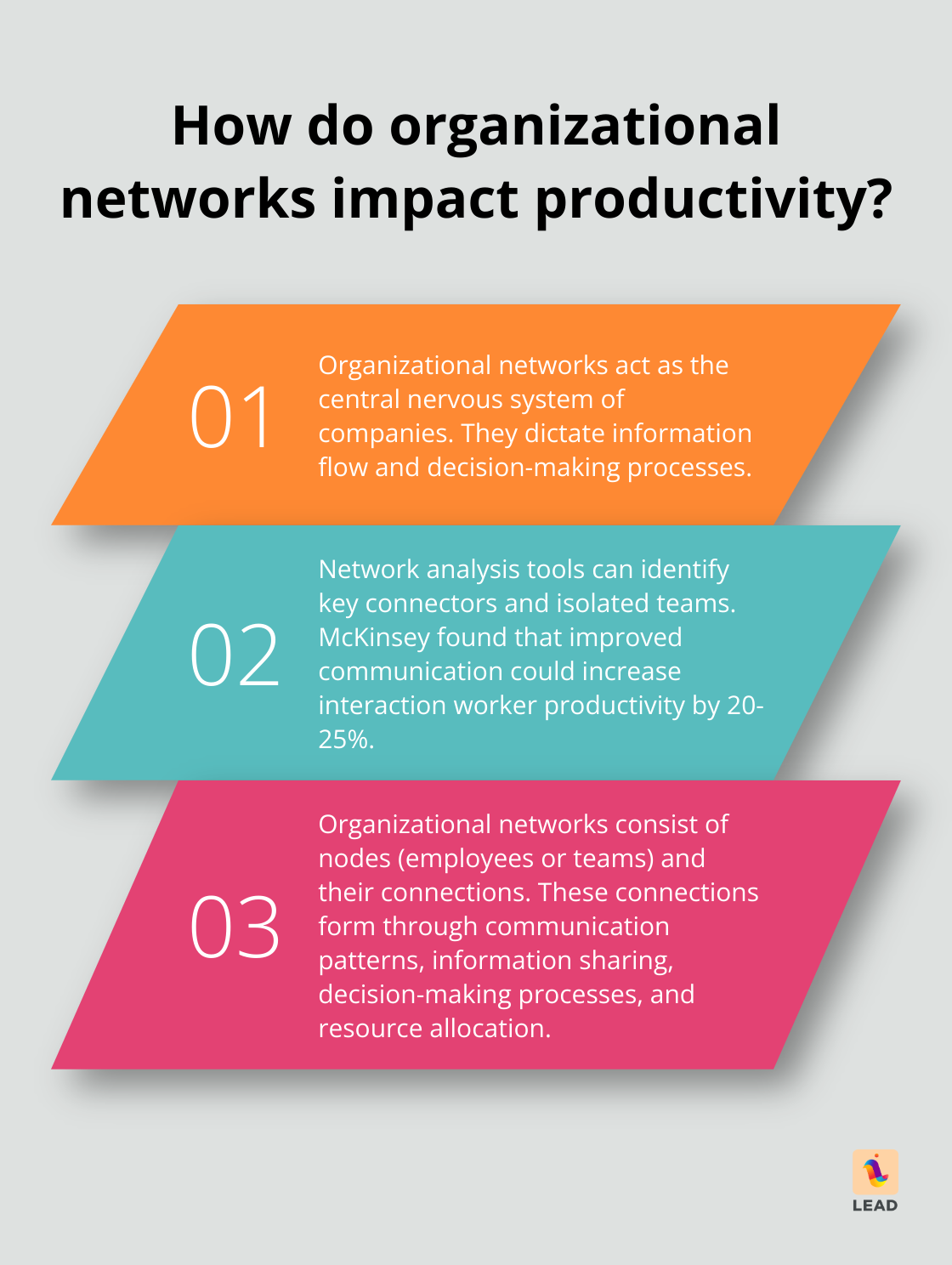
This is also why many teams use organizational network analysis to spot hidden connectors, isolated groups, and collaboration gaps. The picture is often more useful than a standard process map because it reflects how work really happens.
Why organizational networks matter to your team
They help knowledge move faster
Every team depends on context. People need to know who has the answer, who owns a decision, and who can help when work crosses departments. A healthy organizational network makes that easier. Instead of bottlenecking around a few managers, knowledge reaches the people who need it at the right moment.
That matters during onboarding too. A new hire may finish every checklist item and still feel lost if they do not know who to ask for help. When you build better connection patterns early, people gain confidence faster and contribute sooner.
They make collaboration more practical
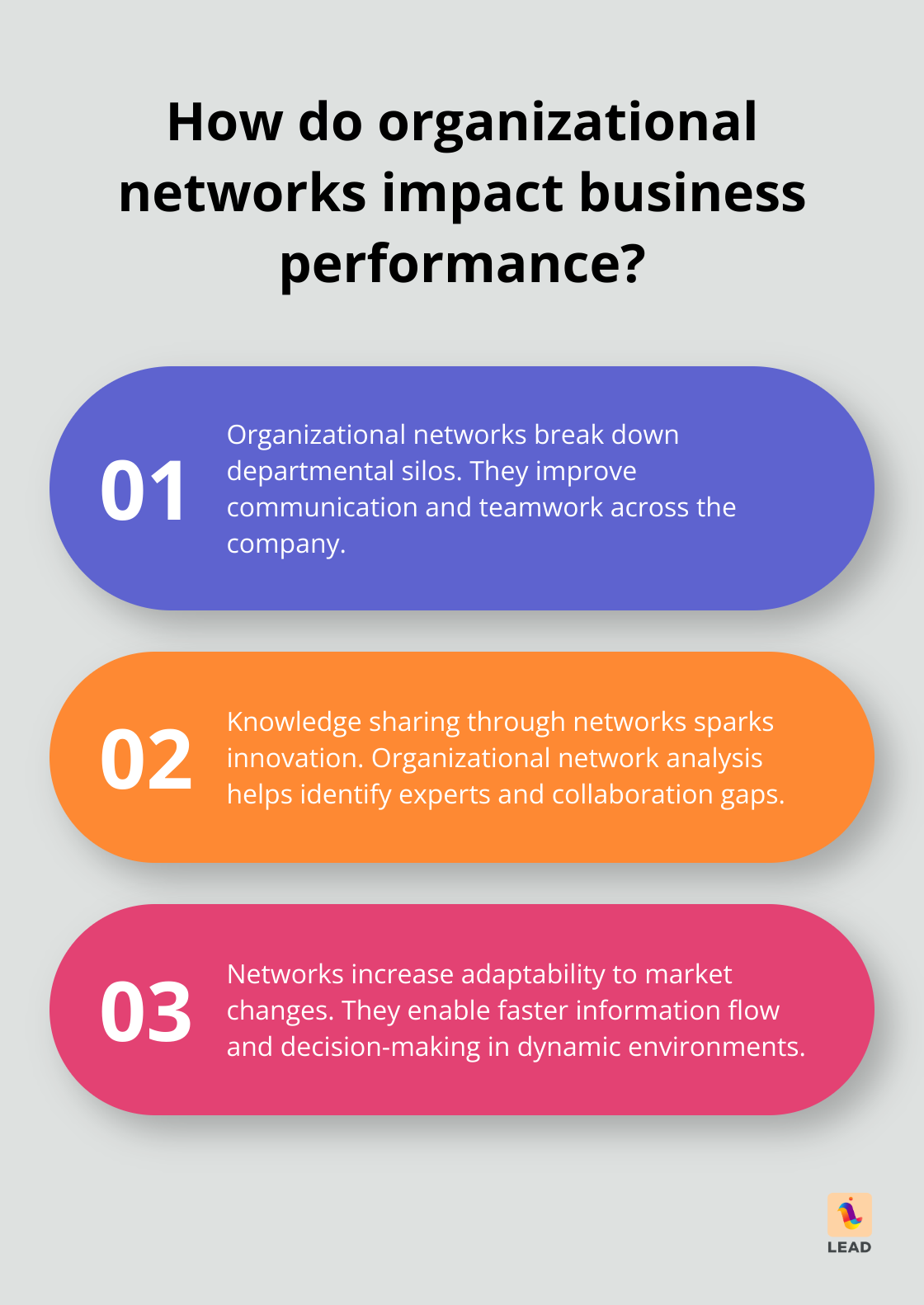
Most collaboration problems do not come from a lack of tools. They come from weak connections between people. When marketing, HR, product, and operations do not know each other well, work slows down. A visible organizational network helps you see where those gaps sit and where small changes can improve flow.
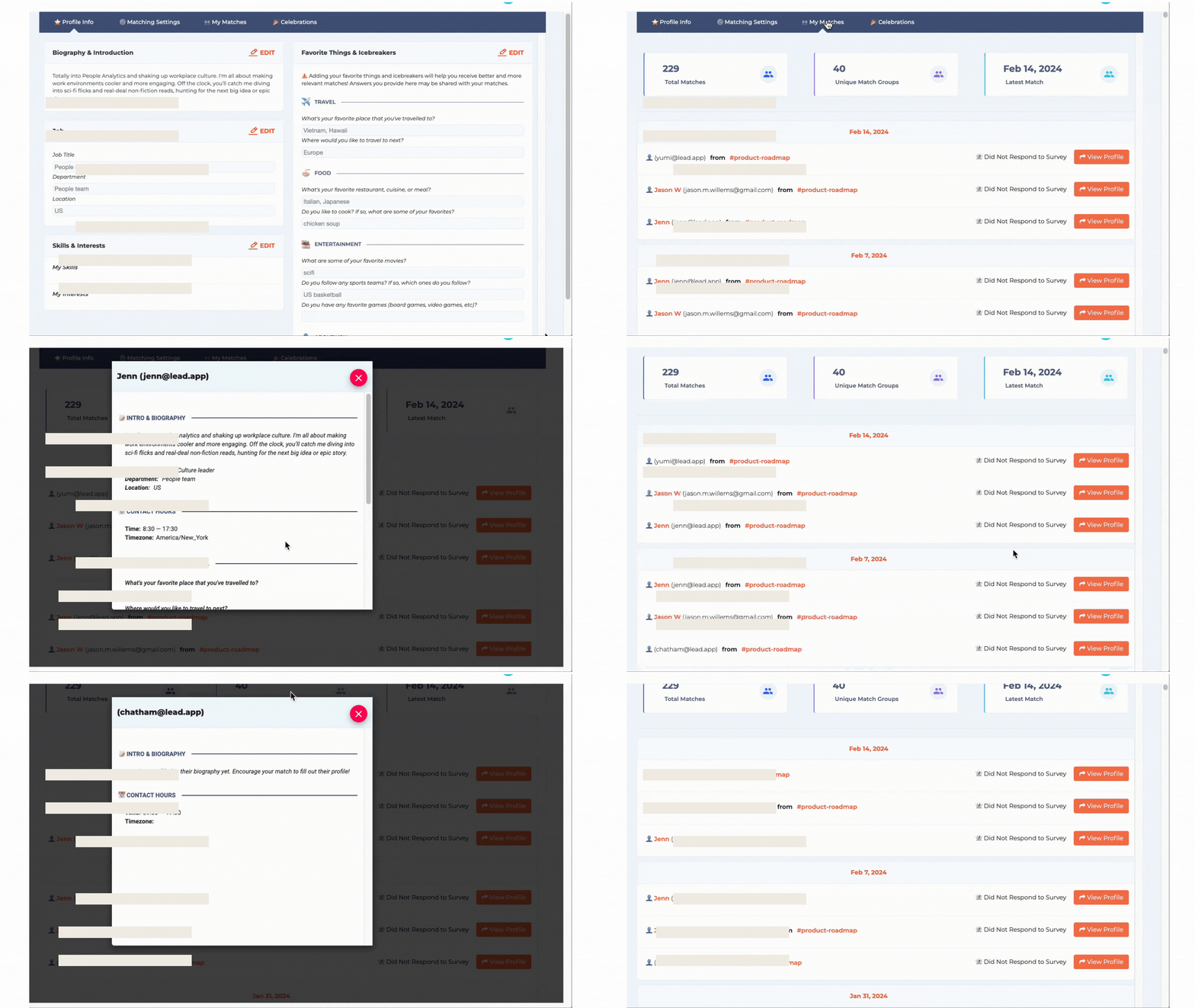
That is one reason many teams combine network insight with intentional connection rituals such as virtual coffee chats, onboarding introductions, and cross-team matching. These are simple moves, but they make your team easier to navigate.
Common types of organizational networks
Formal networks
Formal networks follow the structure your company already defines. They include departments, reporting lines, and official project teams. These connections create clarity and accountability, which you need. But they do not always reflect where help, influence, or trust actually live.
Informal networks
Informal networks grow through repeated interaction. They often form around mentorship, shared experience, friendship, or common work problems. These ties can speed up decisions and make collaboration feel natural. They can also expose risk if too much knowledge sits with a small number of people.
Hybrid and distributed networks
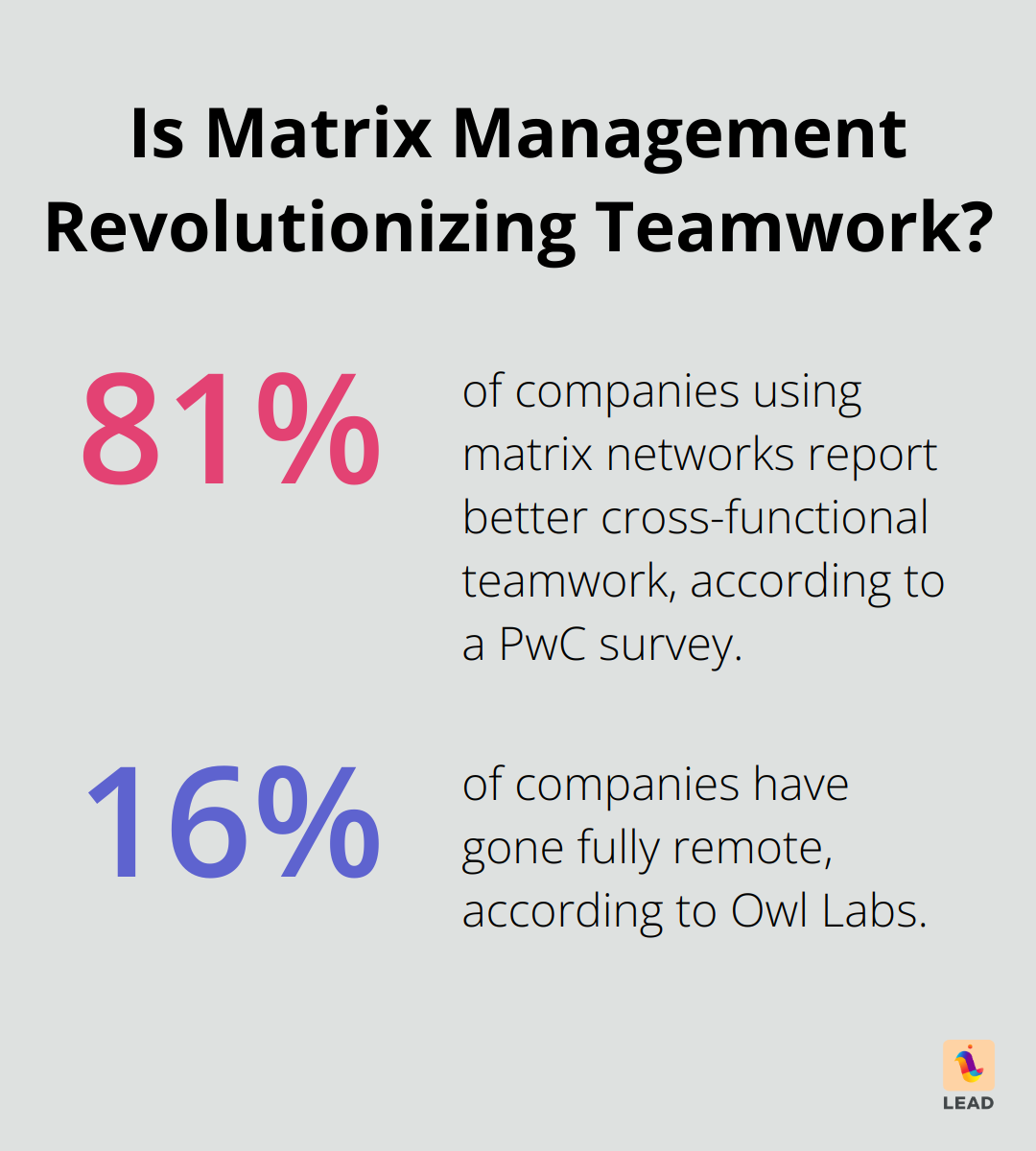
Most modern companies run on a mix of in-person and remote relationships. Some ties are built in Slack. Others form during projects, manager check-ins, or quick introductions between teammates. If your team is distributed, you need to create more chances for these connections on purpose, because they do not happen as easily by accident.
How to strengthen your organizational network
Start by finding the gaps
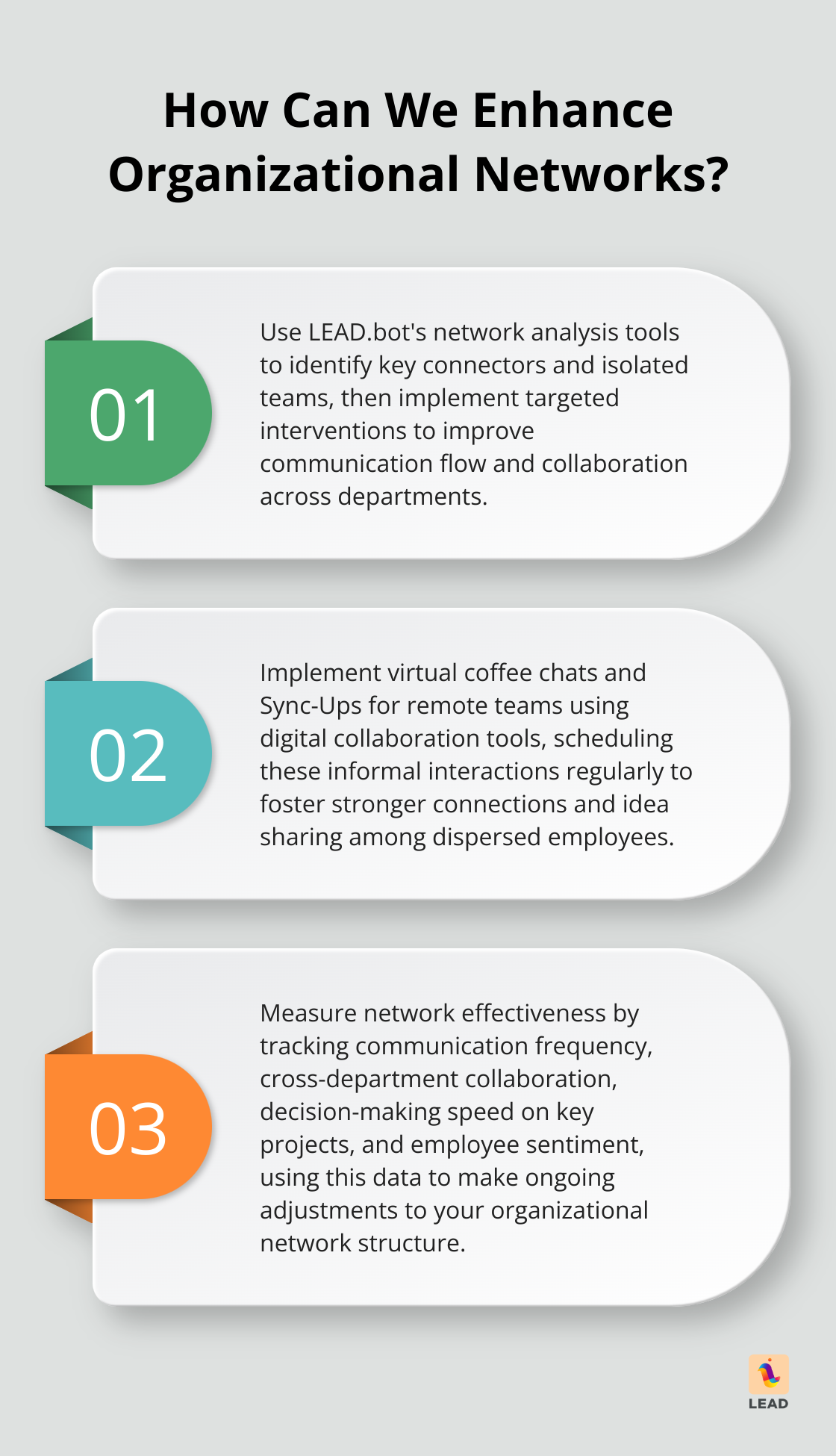
Look for the places where collaboration feels harder than it should. Are new hires slow to find the right people? Do teams depend on one connector for every cross-functional decision? Are some groups left out of important knowledge flows? Those patterns tell you where your network needs attention.
You do not need a huge reorg to improve things. Often, small changes work best. A better onboarding introduction, a recurring peer match, or a clearer path to experts can make the network stronger without creating more process.
Create connection moments that fit real work
The best programs do not force fake networking. They create useful moments for people to meet around shared goals, common challenges, or natural curiosity. That might mean pairing teammates across functions, helping managers introduce new hires to the right peers, or giving employees an easier way to discover internal experts.
If you want a simple place to start, review the moments when connection matters most: onboarding, cross-team projects, manager transitions, and return-to-office shifts. These are the moments when the quality of your organizational network has the biggest impact.
Final thoughts
An organizational network gives you a clearer view of how your team really works. It shows where trust lives, how knowledge moves, and where people may be disconnected. Once you can see those patterns, you can improve them with far more confidence.
The goal is not to force constant interaction. It is to help the right people find each other at the right time. That is what makes work feel smoother, onboarding feel more human, and collaboration feel less like guesswork.
If you want to build stronger connection patterns across your company, explore the LEAD.app blog or visit LEAD.bot to see how teams create better introductions, knowledge flow, and everyday collaboration.