
How to Write a Virtual Coffee Meeting Invite Email
A strong virtual coffee meeting invite email makes it easy for someone to say yes. You are not asking for a favor in the abstract. You are offering a short, relevant conversation with a clear reason to meet. When your note feels personal, specific, and easy to schedule, you get more replies and better conversations.
If you run employee connection programs, this matters even more. A great intro can turn a casual match into real knowledge sharing, faster onboarding, and stronger trust across your team. Tools like LEAD.bot help you create those introductions with more context, but the email still needs to sound human.
Start with a subject line that feels personal
Your subject line should tell the reader what this is and why it is worth opening. Keep it short. Aim for a clear benefit, not a clever trick. A good virtual coffee meeting invite email subject line usually works because it sounds relevant, not salesy.
What works in a subject line
Use plain language, mention the connection point, and keep the ask light. For example: “Coffee chat about onboarding ideas?” or “Quick virtual coffee next week?” Both sound easy to answer.
What to avoid
Skip vague lines like “Let’s connect” or anything that sounds mass-sent. If your subject line could fit any person on your list, it is probably too generic.
Open with context in the first two lines
The first sentence of your virtual coffee meeting invite email should explain why you reached out. Mention the shared project, mutual contact, team goal, or topic you want to discuss. This lowers the effort for the other person. They do not have to guess why they are reading your message.
Keep the opening simple
Try something like: “Hi Maya, I saw your note about cross-team onboarding, and I would love to compare what is working for our teams.” That gives the reader a reason, a topic, and a tone in one sentence.
Show that you did your homework
One detail goes a long way. Mention their recent talk, a post they shared, or a problem they are close to. You do not need a long paragraph. You just need enough proof that this invite is for them, not for everyone.
Make the ask easy to accept
Most people ignore emails when the next step feels like work. Your job is to remove friction. A good virtual coffee meeting invite email gives a clear time frame, a simple purpose, and a low-pressure ask.
Offer specific time options
Instead of asking, “When are you free?” offer two or three windows. For example: “Would Tuesday at 11 a.m. ET or Thursday at 3 p.m. ET work for a 20-minute chat?” That turns a vague back-and-forth into a quick decision.
Keep the meeting short
Say how long the chat will take. Twenty minutes feels manageable. It also signals that you respect the other person’s calendar.
Explain the benefit
Tell them what they will get from the conversation. Maybe you want to exchange onboarding ideas, compare remote team rituals, or share what helps new hires find the right people faster. A clear benefit makes the invite feel useful instead of one-sided.
Use a format that sounds warm, not scripted
Your email does not need to be clever. It needs to sound like a real person wrote it. That means short sentences, one clear ask, and no filler. If your virtual coffee meeting invite email sounds stiff, it will feel like work to answer.
A simple template
Here is a format you can adapt:
Hi [Name],
I have been following your work on [topic], and I would love to hear how your team is approaching [specific issue].
If you are open to it, would you have 20 minutes for a virtual coffee chat next week? I am free [option 1] or [option 2], and I am happy to work around your schedule.
Thanks, and I would enjoy comparing notes.
Best,
[Your Name]
Why this works
It is clear, respectful, and easy to answer. It also leaves room for the other person to say yes without feeling boxed in.
Turn more introductions into real conversations
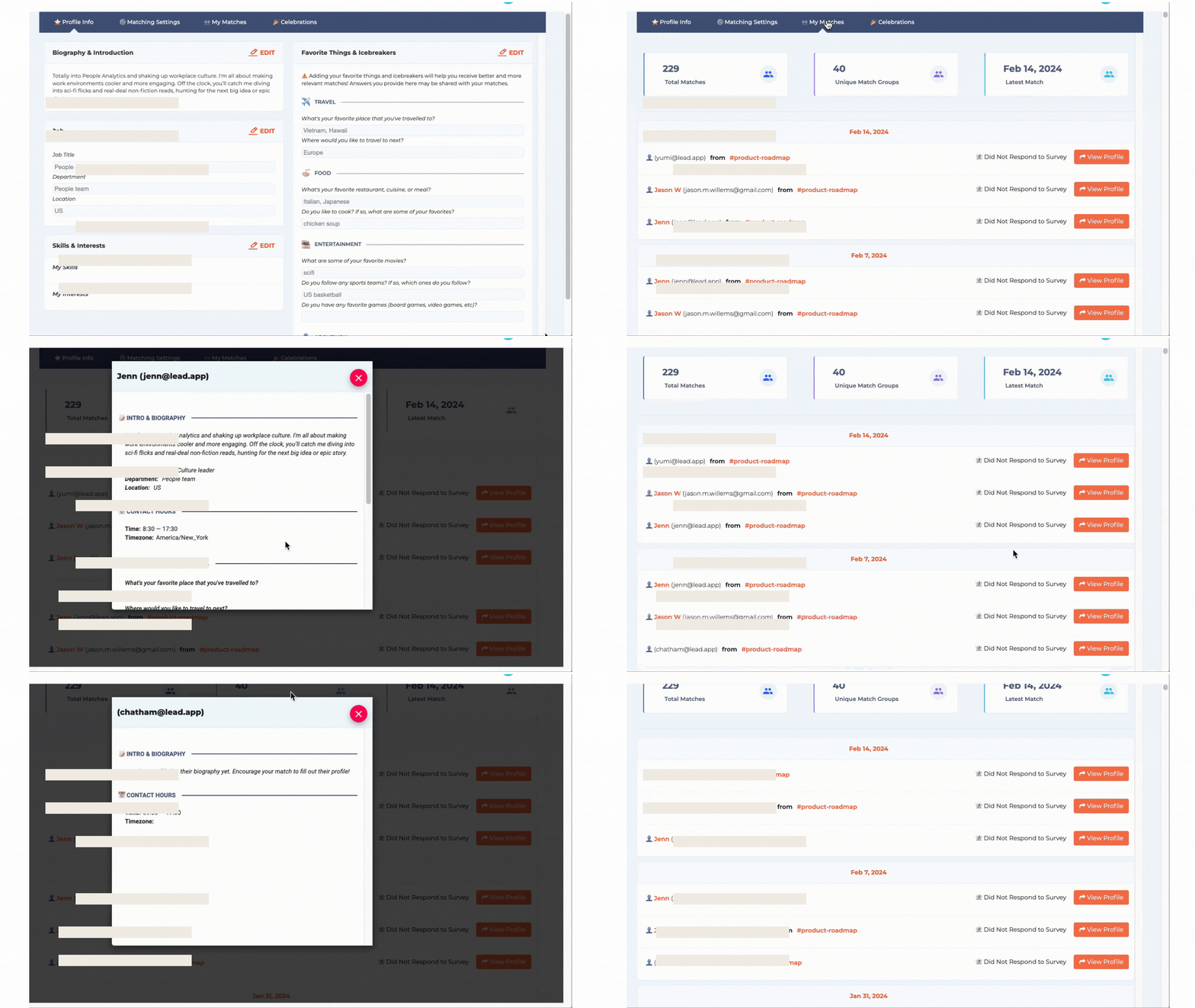
The best connection programs do more than create random meetings. They help your team meet the right people for the right reason. That is where context matters. If you know who shares goals, workflows, or knowledge gaps, your invites become much easier to personalize.
LEAD.bot helps teams create stronger introductions by adding relationship context to employee connections. If you want to improve how people meet across your company, the right system and the right email format work better together.
A strong virtual coffee meeting invite email is short, specific, and useful. When you give someone context, a clear reason to talk, and an easy path to say yes, you stop sending empty invites and start creating conversations that actually help your team.