
How a network of teams organizational model works
Your team can move quickly and still get stuck. One group solves a customer problem, another group launches a process change, and suddenly nobody knows who owns the next decision. A network of teams organizational model gives you a better way to work. Instead of routing every decision through a rigid hierarchy, you create smaller teams that share context, stay aligned on outcomes, and coordinate across functions when the work demands it.
That does not mean removing structure. It means designing a system that helps people find the right collaborator, understand who has context, and move work forward without waiting for a chain of approvals that no longer fits the job.
What a network of teams model changes
In a traditional structure, work often travels up and down a reporting line before it moves across the business. That can slow down decisions, blur ownership, and make collaboration feel heavier than it should. In a network of teams organizational model, you still have leaders and accountability. The difference is that people work through connected teams built around outcomes, projects, or customer needs.
That shift helps you solve cross-functional work in a more realistic way. Product, operations, people, and customer teams can coordinate earlier instead of handing work off after key decisions are already made.
What high-functioning teams need to make it work
Clear decision ownership
Your team needs to know who can decide, who gives input, and who needs visibility. If that is fuzzy, speed disappears. Write the decision owner down, keep the scope small, and review it when priorities change.
Shared context across teams
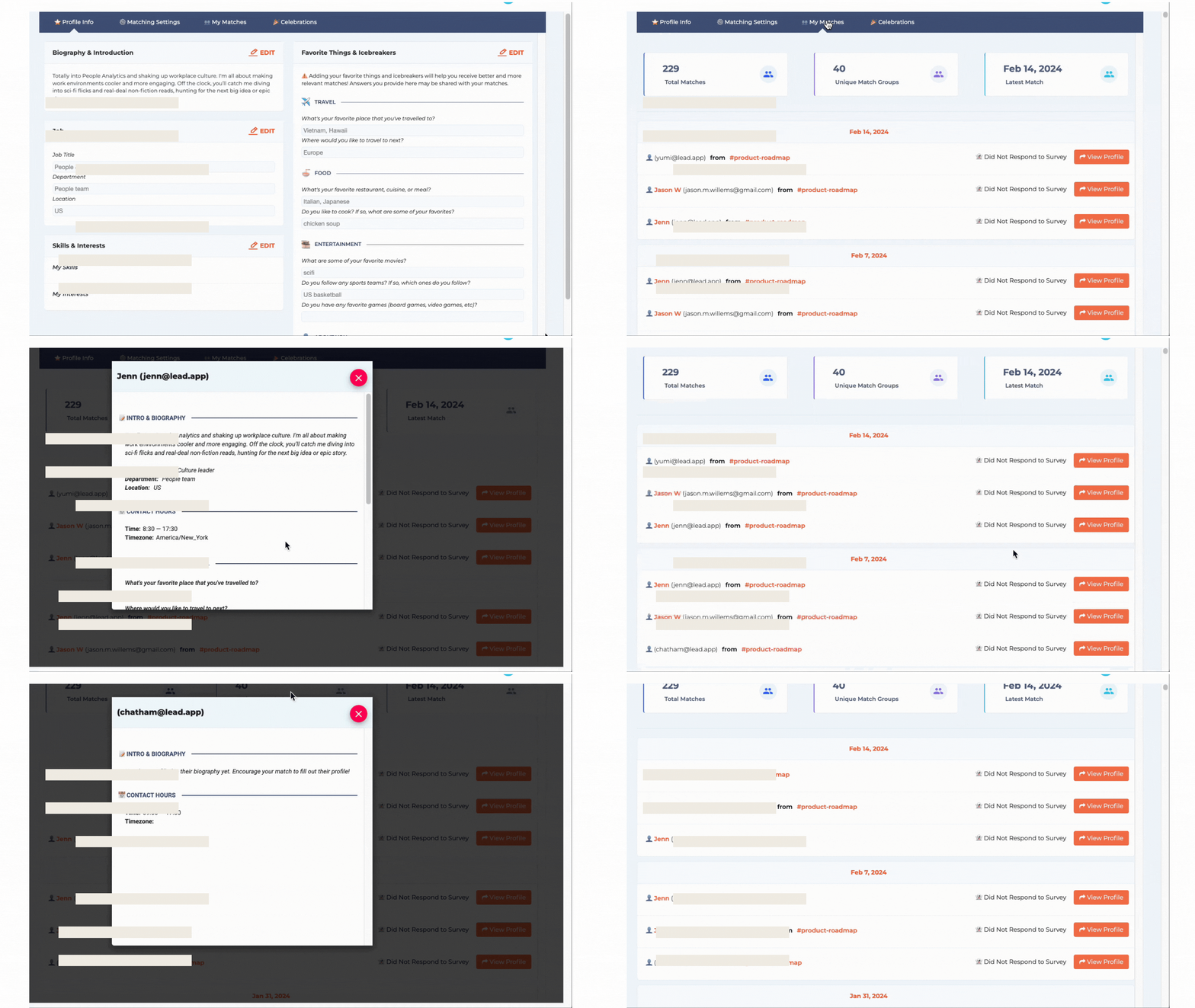
Connected teams work best when people can quickly see who knows what, who works closely together, and where collaboration already happens. That is where a tool like LEAD.bot features can help by making working relationships easier to understand and act on.
Lightweight coordination rituals
You do not need more meetings. You need a few reliable moments to reconnect teams around blockers, dependencies, and customer feedback. Keep those check-ins short and useful so people leave with decisions, not another list of meetings.
Where teams usually get stuck
The biggest risk is assuming autonomy alone will fix collaboration. It will not. A network of teams organizational model can still create confusion if teams are not aligned on outcomes, timelines, or shared language. You may also run into managers who are used to controlling work through approvals instead of coaching teams through tradeoffs.
Start smaller than you think. Pick one workflow that already crosses functions, such as onboarding, product launches, or internal knowledge sharing. Map the people involved, define the handoffs that slow the work down, and test a simpler team structure around that work first.
If you want examples of how people-first collaboration shows up in practice, the LEAD.app blog has more guides on hybrid teamwork, employee connection, and knowledge flow.
How to roll it out without creating chaos
Begin with one business outcome, not a company-wide reorg. Name the teams that need to stay connected. Clarify what each team owns. Then set a few rules for how information moves between them. That approach keeps the network of teams organizational model practical instead of theoretical.
You should also look at the informal side of work. The org chart tells you reporting lines. It does not show who people actually trust, where knowledge gets stuck, or which teammate becomes the real connector during a crunch. LEAD.bot is built for that layer of context, so your team can make better routing, onboarding, and collaboration decisions with less guesswork.
When you are ready to support connected teamwork more intentionally, start with the main LEAD.app site and identify the workflows where better relationship context would remove the most friction.
Final takeaway
A network of teams model works when your people can act quickly without losing alignment. Give teams clear ownership, shared context, and simple coordination habits. Then improve the system as you learn. The goal is not more complexity. It is a way for your team to collaborate like real work already happens.