
How Hybrid Collaboration Tools Keep Your Team Aligned
Your team can have smart people, clear goals, and strong intent, then still lose momentum when work happens across different places. That is why hybrid collaboration tools matter. The right setup helps your in-office and remote employees make decisions faster, share context earlier, and keep work moving without stacking the calendar with extra meetings.
The problem is not a lack of tools. It is tool sprawl, unclear norms, and too many moments where useful context stays with the people who happened to be in the room. If you want hybrid work to feel connected instead of fragmented, you need a setup that supports communication, visibility, and everyday relationship building at the same time.
What hybrid teams need from collaboration tools
Good collaboration tools do more than send messages. They reduce friction in the moments that usually slow your team down, like handoffs, quick questions, project updates, and decisions made after a meeting ends.
Shared context has to be easy to find
When a manager answers a question in the hallway and the remote half of the team never sees it, the work splits in two. Your tools should make updates visible by default, with searchable conversations, clear owners, and lightweight summaries that help everyone catch up fast.
This is also where a simple internal knowledge flow matters. A project channel in Slack or Teams works better when it connects to a shared home for decisions, meeting notes, and next steps. If people have to guess where information lives, they stop trusting the system.
Meetings should include everyone, not punish everyone
Hybrid meetings often fail for a predictable reason: the room becomes the real meeting and the video link becomes the afterthought. Set one rule for every recurring meeting. If one person joins remotely, everyone follows the same structure, with notes, agenda, and decisions captured in the same place.
You do not need more meetings to create alignment. You need fewer meetings with cleaner follow-through. Many teams get better results when they pair scheduled discussions with async updates and clear action items.
Informal connection needs structure too
Some of the most useful work conversations start casually. A new hire asks a simple question. Two teammates discover overlapping projects. Someone finds the right person to unblock a decision. In a hybrid setup, those moments happen less often unless you design for them.
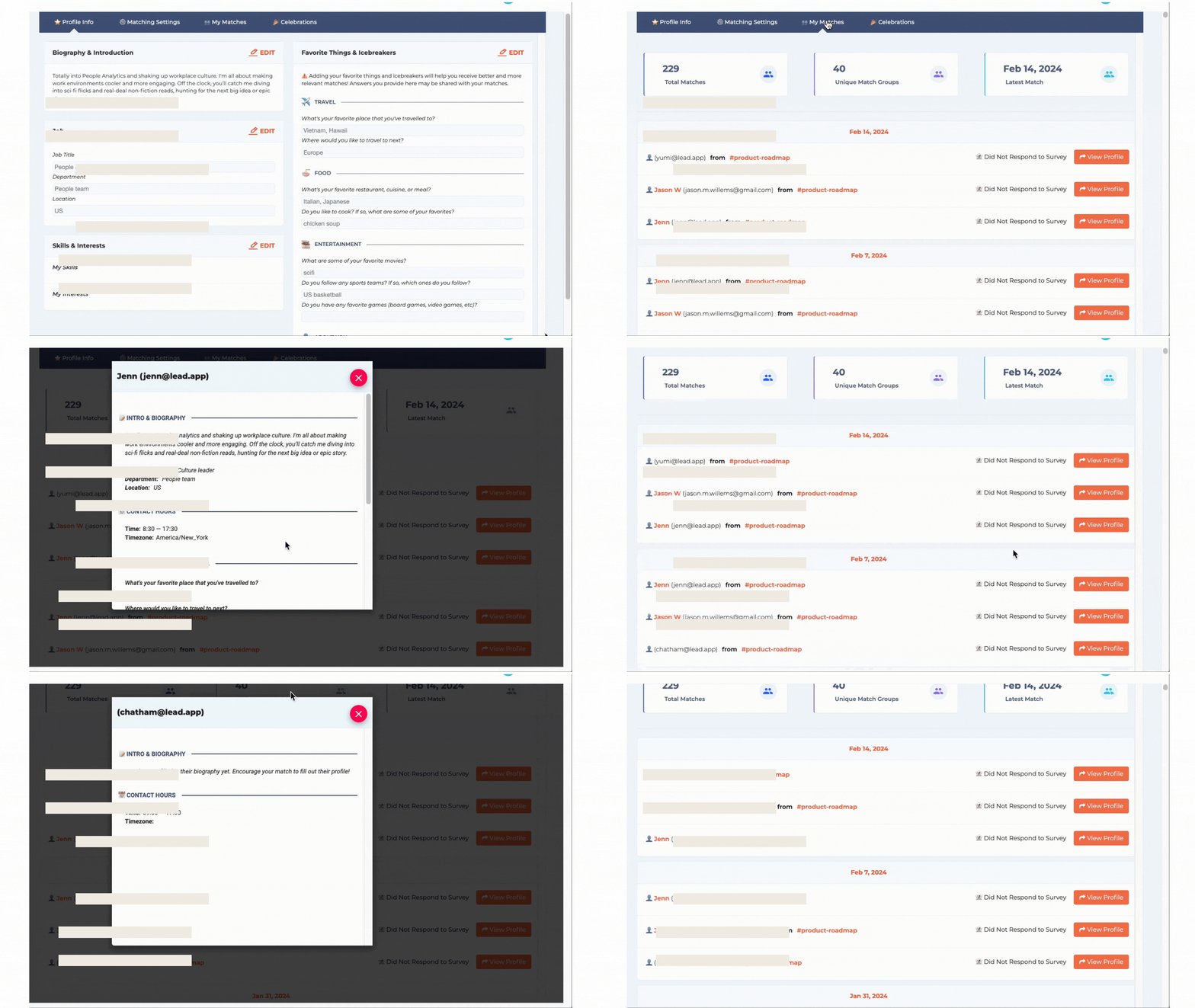
That is where LEAD.bot can help. It works inside Slack and Microsoft Teams to create introductions, encourage coffee chats, and surface relationship patterns that help your team build stronger working ties over time.
How to choose hybrid collaboration tools that people will actually use
The best options fit the way your team already works. If a platform adds friction, employees will route around it and your process will drift back into private messages, scattered notes, and inconsistent follow-up.
Look for fewer handoffs, not more features
A bloated stack usually creates more confusion than value. Before you add another app, ask a basic question: does this tool remove a step from the work, or does it add one? Strong collaboration tools reduce switching between places, especially for communication, task tracking, and decision logging.
If your team already uses Slack or Microsoft Teams, start there. Then add tools that support a clear workflow around planning, documentation, and accountability. You can explore the broader LEAD.app features set if you want collaboration support tied more closely to employee connection and team health.
Set norms before you scale usage
Even the best tool fails without team habits. Decide where project updates belong, when to use chat instead of meetings, how quickly people should respond, and how decisions get documented. Those norms matter more than a long vendor checklist.
For example, many teams improve hybrid coordination by using chat for quick clarifications, project boards for ownership, and a weekly written recap for priorities. That mix gives people enough structure without making every update feel formal.
Measure whether collaboration is getting easier
You should see practical signs that your tools are helping. Are projects moving faster? Are fewer people saying they missed key context? Are managers hearing less frustration about duplicate work or unclear ownership?
It also helps to watch who is connected to whom. If your collaboration patterns stay clustered within functions or office locations, your system may be reinforcing silos. Articles on the LEAD.app blog often return to this point: better collaboration is not only about speed, it is about making the right connections easier to start and sustain.
Practical ways to improve collaboration in a hybrid workplace
You do not need a full reset to make hybrid collaboration better. A few focused changes can make your existing tools far more useful.
Create one visible place for decisions
Every project needs a reliable record of what was decided, who owns the next step, and when the team will revisit the issue. This can be a project page, a shared document, or a task board update. What matters is that everyone knows where it lives.
Build repeatable social touchpoints
Do not leave connection to chance. Set up recurring coffee chats, onboarding introductions, or cross-functional pairings so people meet outside their immediate project bubble. These touchpoints help remote employees build the same kind of working trust that office employees often gain more naturally.
Use relationship insight to find gaps early
If you want to strengthen collaboration, you need to know where it is thin. Relationship insight can show you whether key people are overloaded, whether a team depends too heavily on a few connectors, or whether new employees are not building enough ties across the business.
That is one reason teams use LEAD.bot alongside their existing communication stack. Instead of only tracking activity, it helps you see the social side of collaboration so you can improve it before disengagement or bottlenecks spread.
The right tools support habits, not just tasks
Hybrid collaboration tools work best when they support the way people build trust, share context, and solve problems together. If your current setup makes employees chase information, repeat decisions, or feel left out of the real conversation, the issue is not only process. It is also the system around the process.
Start with the basics. Pick tools that fit your workflow, document decisions in one place, and create simple ways for people to connect across distance. When your tools support both execution and human connection, hybrid work feels far less fragile and your team gets more done with less drag.